Request an Appointment or Give us a call
Appointment
What is Subacromial Decompression?
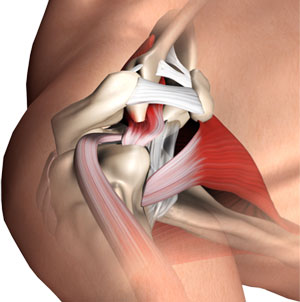
Subacromial decompression is a surgical procedure performed for the treatment of a condition called shoulder impingement. In shoulder impingement, the degree of space between the rotator cuff tendon and shoulder blade is decreased due to irritation and swelling of the bursa or due to development of bone spurs. Subacromial decompression opens this space by removing the bony spurs or any inflamed or swollen bursa enabling free shoulder movement.
What is Anatomy of the Shoulder?
The shoulder joint is a ball and socket joint that is made up of three bones: upper arm bone (humerus), shoulder blade (scapula), and collarbone (clavicle). A ball at the top of the upper arm bone (humerus) fits neatly into a socket, called the glenoid, which is part of the shoulder blade (scapula). A group of muscles and tendons called the rotator cuff surrounds the shoulder joint, keeping the head of the upper arm bone firmly within the shallow socket of the shoulder. There is a lubricating sac called a bursa between the rotator cuff and the bone on top of your shoulder (acromion) that allows the rotator cuff tendons to glide freely on movement of the arm.
What is Shoulder Impingement?
Shoulder impingement is characterized by pain and limitation of shoulder movement due to friction of the tendons and bones rubbing against each other in the shoulder when you raise your arm. This condition impacts the rotator cuff tendon, which is a tough, flexible tissue that attaches the muscles around your shoulder joint to the upper part of your arm.
What are the Causes of Shoulder Impingement?
Some of the causes that can be attributed to shoulder impingement include:
- Thickened, swollen, or torn tendons due to overuse, injury, or wear and tear with age
- Bursitis, a condition of irritation and inflammation of the bursa (a fluid-filled sac) located between the acromion and tendon
- Presence of bony growths (spurs) on the acromion
- Presence of a hooked or curved acromion, as opposed to flat
What are the Symptoms of Shoulder Impingement?
Shoulder impingement can occur gradually over time or suddenly. Some of the common symptoms of shoulder impingement include:
- Weakness in your arm
- Pain or aching at night
- Pain in the outside or top of your shoulder
- Excruciating pain on lifting your arm
What is the Procedure for Subacromial Decompression?
The procedure is performed under general or local anesthesia usually by arthroscopy (keyhole procedure), although it can also be performed as an open procedure.
After adequately sterilizing the surgical area, a few small keyhole incisions will be made around your shoulder through which the arthroscope and tiny surgical instruments will be inserted. Your surgeon will investigate the subacromial space within your shoulder and reshape it accordingly. This increases the space between the rotator cuff tendons and shoulder blade allowing the tendons to move more freely and thus preventing rubbing and swelling. Your surgeon will then remove the instruments and close the incisions with stitches and apply dressings to complete the operation.
What Does Postoperative Care for Subacromial Decompression Involve?
Post-procedure, your doctor or nurse will give you postoperative instructions that need to be diligently followed that include:
- Adhering to prescribed pain medications
- Wearing a sling for comfort and to avoid jerky shoulder movements
- Exercises to prevent shoulder stiffness and strengthen shoulder muscles
- Incision site care
- Avoiding heavy lifting or strenuous activities for at least a couple of weeks
- Mobilizing the shoulder within pain limits
- Refraining from work for 3 to 6 weeks
- Driving instructions
- Follow-up appointments to monitor your progress
Risks and Complications of Subacromial Decompression
As with any surgery, subacromial decompression does have some risks and complications, such as:
- Persistent stiffness and/or pain
- Bleeding
- Infection
- Injury to blood vessels and nerves
- Deep vein thrombosis or blood clots
- Anesthetic complications, such as nausea or vomiting
- Need for repeat surgery
If you wish to be advised on the most appropriate treatment, please call to schedule an appointment or click to request an appointment online.