Request an Appointment or Give us a call
Appointment
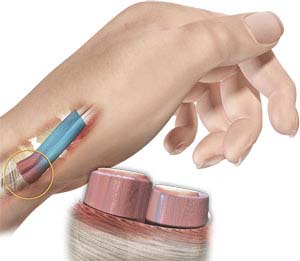
What is De Quervain's Release?
De Quervain's release is a surgical procedure performed to relieve pain and restore thumb and wrist function in patients with De Quervain's tenosynovitis.
De Quervain's tenosynovitis is a condition where the tendons on the thumb side of the wrist become inflamed, causing pain and difficulty with thumb movement. It is caused by inflammation of the abductor pollicis longus (APL) and extensor pollicis brevis (EPB) tendons, which pass through a narrow tunnel (first dorsal compartment) at the wrist. It is commonly triggered by repetitive hand or wrist movements.
What are the Indications for De Quervain's Release?
De Quervain's release is typically indicated for the treatment of De Quervain's tenosynovitis in the following scenarios:
- Persistent pain and swelling on the thumb side of the wrist
- Difficulty with gripping or pinching
- Failure to improve with conservative treatments, such as splinting, NSAIDs, steroid injections, and physical therapy
What Does the Procedure for De Quervain's Release Involve?
De Quervain's release is a minor outpatient surgery that involves cutting the tight sheath around inflamed tendons in the wrist to relieve pain and restore movement. In general, the procedure involves the following steps:
- The procedure is typically done under local anesthesia, sometimes with light sedation.
- The surgical area (thumb side of the wrist) is numbed to prevent pain.
- A small incision (about 2–3 cm) is made over the thumb side of the wrist, right over the inflamed tendon sheath (first dorsal compartment).
- The surgeon carefully identifies the tendon sheath containing the abductor pollicis longus (APL) and extensor pollicis brevis (EPB) tendons.
- Care is taken to avoid injury to nearby nerves, particularly the superficial branch of the radial nerve.
- The tight fibrous sheath (the roof of the compartment) is cut open to release pressure on the tendons.
- If there are separate subcompartments, the surgeon may open each one to ensure full decompression.
- The tendons are checked for free gliding motion, ensuring that no adhesions or tight bands remain.
- After ensuring adequate decompression, the wound is closed with sutures, and a sterile dressing is applied.
What Does Postoperative Care for De Quervain's Release Involve?
After De Quervain's release surgery, the wrist is typically bandaged, and a light splint may be applied to protect the area and minimize movement for the first few days. Mild swelling, soreness, or bruising at the incision site is common and usually managed with ice packs and pain medication. Patients are encouraged to gently move their fingers and thumb soon after surgery to prevent stiffness, while avoiding heavy use of the hand. Stitches are generally removed within 10 to 14 days, and most individuals can gradually return to normal activities over 2 to 6 weeks. Hand therapy may be recommended to restore strength and range of motion, and full recovery is expected in most cases.
What are the Risks and Complications of De Quervain's Release?
Risks and complications of De Quervain's release may include infection, bleeding, scarring, injury to the nearby sensory branch of the radial nerve (causing numbness or tingling), incomplete release leading to persistent symptoms, or tendon subluxation (tendons slipping out of place). Though rare, recurrence of symptoms can also occur.
What are the Benefits of De Quervain's Release?
Benefits of De Quervain's release include significant pain relief, improved thumb and wrist movement, restored grip strength, return to normal daily activities, and a minimally invasive outpatient procedure (same-day discharge) with a high success rate.
If you wish to be advised on the most appropriate treatment, please call to schedule an appointment or click to request an appointment online.